Your cart is empty


Advanced Coastal SOLD OUT
ASA 106 Advanced Coastal Cruising is the ultimate course for sailors looking to take on more challenging conditions by learning the advanced techniques and seamanship required to navigate coastal waters confidently, day or night, in all weather. Whether you’re dreaming of longer passages or exploring more remote destinations, ASA 106 gives you the experience and knowledge to handle your boat like a seasoned skipper in various demanding scenarios.
Sign up for a 7-day exhilarating experience exploring the Aegean Sea earning your Advanced Coastal Cruising certification. ASA 106 Advanced Coastal Cruising builds upon your previous sailing experience, offering the skills and confidence needed to skipper a vessel on extended coastal passages in challenging conditions. You’ll learn advanced sail handling, night navigation, heavy weather tactics, and emergency procedures. This course emphasizes decision-making, leadership, and boat management while cruising in variable weather and sea states. Through practical, hands-on training, you’ll navigate longer passages, perform crew-overboard drills, and manage a vessel’s systems while underway. ASA 106 prepares you for advanced cruising adventures, ensuring you’re ready for any conditions coastal cruising might throw at you.
Airport: Athens International Airport
No. of Students: 4 to 5
Dates
September 5th — 12th 2026
8 days, 7 nights
Location
Sailing School
Sailing School
Availability
0 Double Cabin
0 Single Cabin
Price
$4600 Single Cabin price per cabin
$7200 Double Cabin price per cabin
ASA 106 Course Itinerary
The final itinerary will be determined by the weather and wind forecast and waypoints may shift throughout the voyage. There will be an evening - overnight passage during the course and exams will be proctored once returning to port on the final day of the course.
Day 1 – Saturday | Nea Peramos, Attica The Advanced Coastal Cruising course with a Sailing Collective instructor begins Saturday afternoon at Nea Peramos Marina in Attica. After meeting your instructor and fellow crew, you will be introduced to the chartered monohull and begin the process of preparing the vessel for the week ahead. The afternoon is devoted to provisioning, reviewing safety equipment, and conducting a detailed technical briefing on the yacht’s systems and handling characteristics. With your instructor, the group will also review weather forecasts and chartwork to plan the itinerary and discuss the training objectives for the voyage ahead. The evening concludes with final preparations and a restful night aboard before departing Athens.
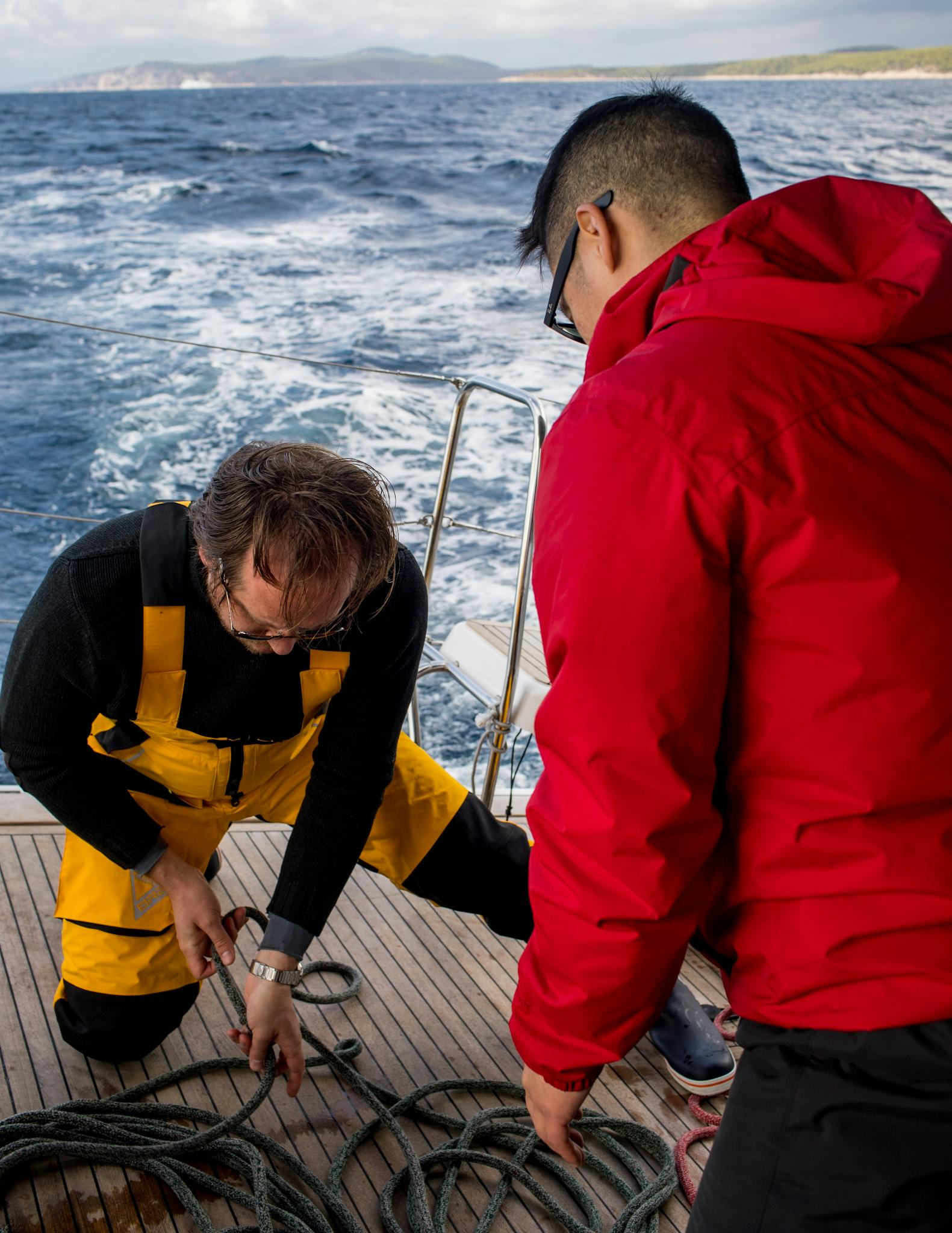
Day 2 – Sunday | Attica to Poros An early morning departure marks the start of your first leg departing Attica and heads south into the Saronic Gulf bound for Poros. This passage serves as an excellent introduction to the week’s training, focusing on sail trim, watch organization, navigation, and vessel handling under way. As the pine-covered hills of Poros come into view, the crew will practice harbor approaches and docking techniques before securing the yacht along the lively waterfront. The evening offers time to explore the island village and enjoy dinner ashore.
Day 3 – Monday | Poros to Serifos Weather and wind conditions permitting, Day 3 features one of the longer offshore passages of the course as the yacht departs the Saronic Gulf and heads into the open waters of the Cyclades toward Serifos. This leg emphasizes offshore navigation, passage planning, and teamwork during a sustained day under sail. The dramatic cliffs and whitewashed village of Serifos rise above the harbor as the yacht approaches late in the day. After mooring in the sheltered bay, the evening is spent relaxing and reviewing the day’s sailing lessons.
Day 4 – Tuesday | Serifos to Milos The course continues southward with a sail to Milos, an island renowned for its volcanic landscapes and protected natural harbors. Upon arrival, the focus shifts to practical boat-handling exercises. Under the guidance of your instructor, the crew will conduct multiple docking and maneuvering drills, practicing close-quarters handling, line management, and communication in harbor conditions. The evening provides time to rest and enjoy Milos before the next phase of training.
Day 5 – Wednesday | Circumnavigating Milos & Overnight Passage Day 5 is devoted to sailing around the dramatic coastline of Milos, giving the crew the opportunity to refine sail handling and navigation while exploring the island’s remarkable geography from the sea. After completing the circumnavigation, the crew prepares the yacht for an overnight passage. An early evening meal and rest period precede the departure, allowing everyone to be well prepared for night sailing. Once under way, the instructor will guide the crew through watch rotations, nighttime navigation, and offshore seamanship as the yacht sets course north toward Hydra.
Day 6 – Thursday | Arrival in Hydra At first light the yacht approaches Hydra, arriving in the island’s famous horseshoe harbor around 8:00 a.m. Known for its preserved architecture and car-free streets, Hydra offers a striking contrast to the open sea crossed overnight. After securing the yacht, the crew enjoys a relaxed morning ashore and time to rest after the passage. Later in the day, the instructor will lead a debrief reviewing the night sail and the advanced cruising skills practiced during the voyage.
Day 7 – Friday | Hydra to Attica The final leg of the course begins with a morning departure from Hydra for the return sail to Nea Peramos Marina. This passage provides one last opportunity to apply the techniques learned throughout the week—navigation, sail management, communication, and confident boat handling. Arriving back in Athens in the afternoon, the crew completes the course with a final review of the week’s training, closing a rewarding seven days of advanced sailing across some of Greece’s most celebrated waters.
Crew

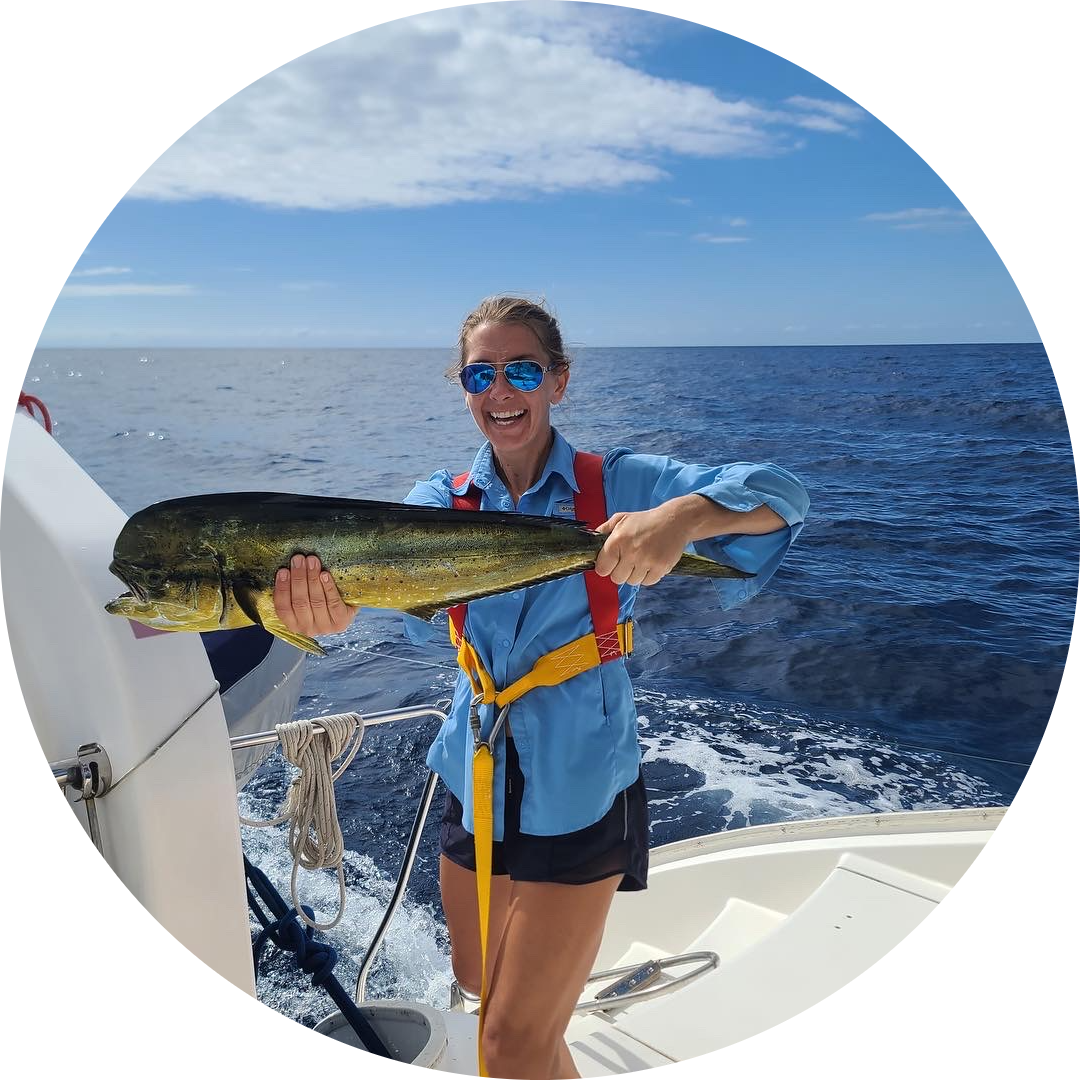
Lavonne Brown
Captain
Known as “V,” Lavonne grew up in the Carolinas, where she spent her childhood hiking, camping, rafting, and exploring the Appalachian Mountains. More than 19 years ago, she moved to Key West, Florida, and fell in love with the ocean. She eventually bought and lived aboard her sailboat, Restless Ketch, for six years, cruising throughout Key West and the Western Caribbean. Along the way, she discovered Belize, drawn to its azure waters and spectacular marine “rainforests,” and has made it her seasonal home ever since. For the past 10 years, Lavonne has worked as a professional captain in Belize, where she has developed an intimate knowledge of its waters and cruising grounds. She also serves as a captain with Sailing Collective, taking her to destinations around the world, including French Polynesia, Croatia, Greece, and many more. Lavonne holds a Yachtmaster License, USCG 100-Ton Captain’s License, and ASA 103, 104, 105, and 106 Instructor Certificates. She loves teaching and sharing her passion for sailing, the sea, and the experiences she has gained throughout her career. Her greatest passion, however, may be offshore passages. She has completed numerous long-distance voyages, including South Carolina to Tahiti, St. Maarten to Tahiti, Puerto Rico to Rhode Island via Bermuda and back, as well as countless passages throughout the Western Caribbean, Florida, and Belize. Whether teaching, leading a charter, or making an offshore passage, Lavonne brings a deep knowledge of the sea, a genuine love of adventure, and an infectious enthusiasm for sharing the sailing life with others.
Course Information for 106
PREREQUISITES
101 Keelboat Sailing
103 Coastal Cruising
104 Bareboat Cruising
105 Coastal Navigation
STUDY MATERIALS
Coastal Navigation & Piloting (Tursi)
Coastal Navigation Manual (Pyzel)
USCG Navigation Rules & Regulations Handbook
U.S Chart No. 1
USCG Light List
Local Notice to Mariners
ASA 106, Advanced Coastal Cruising
KNOWLEDGE
1] Explain the chart symbols and conventions on U.S. nautical charts in accordance with the terminology of Chart #1. 2] Identify a source of official U.S. Coast Guard navigation publications.
3] List the publications required for prudent navigation in the local area including:
Large scale charts of the area and Chart #1 • Federal Requirements for Recreational Boats • USCG Navigation Rules and Regulations Handbook • State small vessel regulations • Local rules and regulations, if applicable • Local cruising guides • Tide and current tables, (paper or electronic) ª List of lights, buoys, and fog signals
4] Describe the instruments required for prudent navigation in the local area including the following minimum requirements:
Steering compass and deviation table • Handbearing compass and / or pelorus • Binoculars • Protractor or parallel rule • Depth sounder or leadline • Pencil, eraser, and notebook • Dividers • Watch or clock • Log / Knotmeter
5] Describe the purpose and example contents of a “Notice to Mariners.” 6] Explain the terms and characteristics used for lighted navigation aids. 7] Explain the significance of shapes, colors, and lights used in the U.S. Aids to Navigation (ATON) system.
SKILLS
8] Use the tide and current tables to find:
Times and heights of tides at reference and secondary ports. • Direction and rate of current at referenced and secondary stations.
9] Convert courses and bearings between true, magnetic, and compass. 10] Check compass deviation by a transit bearing or other means. 11] Plot a dead reckoning position on a chart using speed, time and course to steer. 12] Allow for the effect of current and leeway to plot the estimated position. 13] Determine a course to steer which takes into account known current and leeway. 14] Determine current given the course steered and speed and two observed positions.
15] Plot a chart position from terrestrial objects using:
Two or more bearings on different objects taken at one time. • Bearings at different times (i.e. a running fix). • One bearing and transit range. • One distance (i.e. a sounding or dipping a light) and one bearing.
16] Chart a course of at least 20 miles and three course changes using the above skills.
FAQ
What if have equivalent courses from a different sailing institution?
Your equivalent course must be valid to confirm the equivalency test. It is possible for your previous courses to be converted to ASA and each course will have a registration fee. Discuss with us in more detail.
I have my ASA 101 through 104 but do not have the ASA 105 Coastal Navigation certification. Can we do this during the 106 course?
The 106 course is too demanding to add in the ASA 105 course. But we are able to plan a regional ASA 105 course and if there is enough interest, can even plan an online course.
What is the cabin layout?
We are on a well maintained Oceanis 51 equipped with five private cabins + one forepeak for your instructor. The two-aft cabins can accommodate two students and the forward cabins are designated for solo students. It's possible to share a cabin and there one twin bunk bed cabin in addition.
What is the closest airport to the marina
Athens International Airport is approximately 40–45 min from Nea Peramos, Attica (the coastal town west of Athens). Please let us know if you need assistance with a transfer.
Cost: what is included in the price of the course
Cabin from Saturday - Saturday
Instructor fees
The ASA 106 text book
Provisioning for onboard meals
Marina and port fees
Boat incidentals including: boat water, fuel, bedding, and towels
Cost: what is NOT included in the price of the course
Travel
On shore activities including dinning
Instructor gratuity - we recommend offering 5% - 10% of the cost of your cabin is courteous and appreciated
Onboard alcohol




Advanced Coastal SOLD OUT
Sailing School
Dates
Location
Only 0 Cabins Left

















Stay Updated
For news on upcoming journeys, events and more sign up for our newsletter
© Sailing Collective Travel Co. 2026